
Virgin MediaM500Fibre Broadband Review
Average download speeds of 516 Mbps. Ideal for 6-10 busy users, large game downloads and 4K streaming
From £28.99 a month
Prices checked daily, contract terms vary by postcode, speeds shown are provider averages •Ofcom guidance •Affiliate-supported •Methodology
30 second postcode check, no credit impact
Last updated: 13 September 2026 at 20:33
Is Virgin Media M500 Worth £29.99/Month in 2025?
M500 represents the "sweet spot" in Virgin Media's lineup—offering sufficient bandwidth for 4K streaming, cloud gaming, and smart home ecosystems without the premium of Gigabit tiers.
The Technical Reality of "516 Mbps"
The specific figure—516 Mbps rather than a flat 500—is a deliberate engineering choice. Virgin over-provisions by ~3% to ensure ASA compliance, which requires at least 50% of customers achieve advertised speeds at peak times (8pm-10pm).
The key benefit is value positioning. At £29.99, M500 costs approximately 5.8p per Mbps—the best ratio in Virgin's lineup until promotional Gig1 pricing undercuts it.
Target demographic: Medium to large households with 15+ connected devices. In 2020, 500Mbps was enthusiast-grade. By 2025, it's the baseline for modern bandwidth demands.
The Bottom Line
Best value in Virgin's lineup
5.8p per Mbps vs 2.8p for Gig1—but you pay less overall
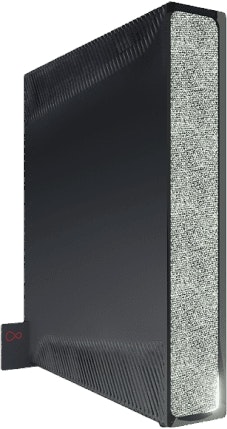
Hub 5 router included
WiFi 6 capability—a step up from Hub 4 on lower tiers
Volt arbitrage opportunity
Add £8 O2 SIM → get free Gig1 boost + doubled data
52 Mbps upload is the weakness
10:1 asymmetry—content creators should look at Gig1+
What Do You Get With M500 for £29.99/month?
Virgin Media's M500 Fibre Broadband is the company's most strategically important tier—positioned as the "sweet spot" between budget options like M350 and premium gigabit offerings. With average download speeds of 516 Mbps and upload speeds of 52 Mbps, it delivers nearly 6x the UK average speed at a price point designed to compete with Altnet full-fibre providers like Hyperoptic and Community Fibre.
The 516 Mbps figure is deliberate—Virgin over-provisions by approximately 3% to ensure ASA compliance, which requires at least 50% of customers achieve advertised speeds at peak times (8pm-10pm). This engineering buffer accounts for TCP/IP overheads and network congestion.
M500 is available on three distinct network architectures: HFC (Hybrid Fibre-Coaxial) serving approximately 14 million premises, RFoG (Radio Frequency over Glass) from Project Lightning expansion areas, and Nexfibre XGS-PON covering an expanding 5-6 million premises. Your experience varies significantly based on which network serves your postcode.
The package includes the Hub 5 router with WiFi 6 technology as standard (though the "router lottery" means some customers still receive Hub 4). With optional WiFi Pods, coverage extends throughout larger homes. The WiFi Guarantee promises 30Mbps minimum in every room or £100 credit.
For O2 mobile customers, the Volt arbitrage opportunity is compelling: add a £8/month O2 SIM to get boosted to Gig1 speeds (1,130 Mbps), double your mobile data, and receive free WiFi Max worth £8/month. Learn more about how Volt works—it effectively gets you gigabit speeds for less than buying Gig1 directly.
The key limitation is the 52 Mbps upload cap on HFC/RFoG networks—a physical constraint of the DOCSIS spectrum allocation. Only Nexfibre XGS-PON areas can access the £6/month symmetrical speed add-on for 500/500 Mbps. Content creators and heavy uploaders who need fast uploads should consider Gig2 or work-from-home optimised packages.
Fixed £3.50/month annual price rises apply each April (contracts from Jan 2025), replacing the unpredictable RPI+3.9% mechanism. Out-of-contract pricing jumps to £68-£96/month, so always renegotiate before contract end.

M500 Pricing History: From Premium to Value Tier (2020-2025)
The pricing history of M500 offers a case study in UK telecoms economics—from aggressive acquisition to inflation-linked extraction, then regulatory intervention.
2020-2021
Acquisition Era
M500 priced £42-£46/month as premium tier. Focus on bundling with 'Oomph' packages. Fixed prices for 18 months with no inflation clauses.
2022-2023
RPI + 3.9% Introduced
Inflation mechanism added to contracts. April 2023: massive 13.8% hike. M500 customer paying £50/mo saw +£7/month overnight.
April 2024
Another 8.8% Rise
Out-of-contract M500 price ballooned to £86+. Massive gap between loyal customers and new sign-ups getting £30-35.
Jan 2025
Regulatory Reset
Ofcom pressure forces 'Pounds and Pence' model. New standard: fixed £3.50/month annual rise. More transparent but regressive for low-price deals.
Dec 2025
Current State
New customers: £29.99-£37.99. Retentions: £28-£35. Out of contract: £68-£96. 'Loyalty penalty' persists.
2025 M500 Pricing Segmentation
| Customer Segment | Configuration | Price Range | Notes |
|---|---|---|---|
| New Customer (Promo) | Broadband Only | £29.99 – £37.99 | Discounted to undercut Altnets |
| New Customer (Promo) | Volt Bundle (TV+SIM) | £84.99+ | High ARPU target |
| Existing (Retentions) | Negotiated Deal | £28.00 – £35.00 | Via cancellation dance |
| Existing (Standard) | Out of Contract | £68.00 – £96.00 | The "loyalty penalty" |
| Rolling Contract | Flexi (30-day) | £54.00 – £62.00 | +£45 upfront setup |
Note: Social Tariff (Essential Broadband) is capped at 54Mbps—M500 not available. MoneySavingExpert data shows 84% success rate for customers who haggle.
Virgin Media M500 Packages
Choose broadband-only or add phone, TV, and Volt mobile bundles
Showing 6 of 6 deals

M500 Fibre Broadband
Average 516 Mbps
516 Mbps
52 Mbps
18 month contract
M500 Fibre Broadband
Fixed price until March 2026 bill
516 Mbps
18
Month contract
£29.99
Per month
M500 Fibre + Netflix
Average 516 Mbps
516 Mbps
52 Mbps
18 month contract
M500 Fibre + Netflix
Fixed price until March 2026 bill
516 Mbps
18
Month contract
£31.99
Per month
M500 Fibre + Phone
Average 516 Mbps
516 Mbps
52 Mbps
18 month contract
M500 Fibre + Phone
Fixed price until March 2026 bill
516 Mbps
18
Month contract
£37.99
Per month
M500 + 10GB O2 SIM (Volt)
Boosted to Gig1 (1130 Mbps)
1130 Mbps
104 Mbps
24 month contract
M500 + 10GB O2 SIM (Volt)
Fixed price until March 2026 bill
1130 Mbps
24
Month contract
£37.99
Per month
M500 + Unlimited O2 SIM (Volt)
Boosted to Gig1 (1130 Mbps)
1130 Mbps
104 Mbps
24 month contract
M500 + Unlimited O2 SIM (Volt)
Fixed price until March 2026 bill
1130 Mbps
24
Month contract
£46.99
Per month
M500 + Sport + Cinema + Netflix
Average 516 Mbps
516 Mbps
52 Mbps
18 month contract
M500 + Sport + Cinema + Netflix
Fixed price until March 2026 bill
516 Mbps
18
Month contract
£74.99
Per month
The Volt Arbitrage: Get Gig1 Speeds at M500 Prices
Since the 2021 Virgin Media + O2 merger, M500 has become a lever to drive mobile adoption. The Volt proposition creates a distinct arbitrage opportunity.
How the Speed Boost Works
When a household has both Virgin Media broadband and an eligible O2 Pay Monthly SIM at the same address, the broadband speed is automatically elevated to the next tier.
M500 → Gig1 Boost
516 Mbps boosted to 1,130 Mbps
Double Mobile Data
5GB SIM becomes 10GB with Volt
Free WiFi Max
£8/month value—up to 3 mesh WiFi Pods
The Calculation
vs buying Gig1 directly: £31.99/mo (without mobile or WiFi Max). The Volt bundle is effectively cheaper for Gigabit speeds if you value the mobile SIM at anything above £0.
Understanding the Volt Ecosystem
The 2021 merger between Virgin Media and O2 created Volt—a cross-product loyalty programme designed to increase customer stickiness by tying broadband and mobile services together. For M500 customers, this creates an unusual opportunity where the combined cost of broadband + mobile is less than the standalone cost of higher-tier broadband alone.
The Fine Print on Volt Speed Boosts
The speed boost is automatic once Volt is activated, but there are nuances. The boost applies to download speeds only—upload remains capped at 52 Mbps on HFC/RFoG networks regardless of Volt status. On Nexfibre XGS-PON areas, the upload boost to 104 Mbps applies with the speed tier upgrade.
Is Volt Worth It for Light Mobile Users?
The cheapest eligible O2 SIM is £8/month for 5GB (doubled to 10GB with Volt). If you rarely use mobile data, this may seem wasteful. However, the value calculation includes: free WiFi Max (£8/mo value), speed boost from 516Mbps to 1,130Mbps, and enhanced EU roaming. Even if the SIM goes unused, the ancillary benefits can justify the cost.
Volt Strategy Recommendation
If you're considering M500 and have any use for an O2 mobile SIM—even as a backup phone—the Volt arbitrage is mathematically compelling. You get Gig1 speeds for £6 more than M500 standalone, plus 10GB mobile data and WiFi mesh. The only scenario where M500 without Volt makes sense is if you're on a competing mobile network with no intention of switching.
The Three Networks Behind M500: Why Your Experience Varies
Unlike Openreach-based providers with standardized topology, Virgin Media's 2025 network is a complex hybrid of three distinct architectures. The "M500" experience varies significantly depending on which serves your premise.
HFC (Legacy Coax)
~14 million premises
- • Fibre to street cabinet, coax to home
- • DOCSIS 3.1 protocol with OFDM
- • 516 Mbps down reliably achieved
- • 52 Mbps up cap—physical limitation
- • Higher jitter (latency variance)
- • 15-25ms first-hop ping typical
RFoG (Project Lightning)
2015-2022 expansion areas
- • FTTP to premise, then converts to RF
- • "Fake coax"—uses same Hub 3/4/5
- • Same DOCSIS limitations
- • 52 Mbps upload cap persists
- • Similar latency to HFC
- • Fibre at the wall, coax experience
Nexfibre (XGS-PON)
~5-6 million premises (expanding)
- • True full-fibre architecture
- • XGS-PON standard (10Gbps capable)
- • Symmetrical speeds possible
- • +£6/mo unlocks 500/500 Mbps
- • <5ms first-hop ping
- • York, Milton Keynes, Belfast, etc.
Why This Matters for You
Two M500 customers in different postcodes can have fundamentally different experiences. The "symmetrical speed add-on" (£6/mo) is only available on Nexfibre XGS-PON—impossible on HFC/RFoG due to physical DOCSIS spectrum limitations.
Action: Use Virgin's address checker to identify your network type. If upload speed is critical, M500 only competes with Altnets on the Nexfibre footprint.
The 52 Mbps Upload Problem: M500's Achilles' Heel
A critical "missing link" in the standard M500 offering. As content creation, cloud backups, and large file transfers become common, the 10:1 asymmetry has become a competitive liability.
The Technical Constraint
On HFC networks, the "return path" is squeezed into the 5 MHz to 65 MHz frequency range. This physical constraint makes it technically and financially prohibitive to offer symmetrical speeds on DOCSIS infrastructure.
10:1
Download:Upload ratio
52 Mbps
Max upload on HFC/RFoG
Result: For 14 million HFC/RFoG customers, the upload cap is immutable until "Project Mustang" retrofits their area to XGS-PON (targeted late 2020s).
Real-World Upload Impact
Red = M500 standard (52 Mbps up) | Green = Symmetrical 500/500 (Nexfibre only)
The £6/Month Symmetrical Speed Add-On
In Nexfibre XGS-PON areas, Virgin offers a symmetrical speed add-on for £6/month that upgrades M500 from 516/52 Mbps to 500/500 Mbps. This transforms M500 into a genuine competitor to Altnet full-fibre offerings from CityFibre, Hyperoptic, and others.
Who Qualifies?
- • Nexfibre XGS-PON areas only (York, Milton Keynes, Belfast, expanding)
- • Not available on HFC or RFoG networks—physical impossibility
- • Staff training inconsistent—some agents unaware it exists
- • May need to escalate to get accurate information
Why It Matters
- • Unlocks symmetrical 500/500 for content creators
- • Cloud backup speeds increase 10x
- • Video call quality vastly improved
- • Total cost: £35.99/mo—still competitive with Altnets
How to Check Your Network Type
Use Virgin's address checker or contact customer service to confirm whether your postcode is served by Nexfibre XGS-PON. If you're on legacy HFC/RFoG, the symmetrical add-on is physically impossible—regardless of what any sales agent promises. Project Mustang aims to retrofit these areas to XGS-PON in the late 2020s, but no firm timeline exists.
How Fast Is Your Current Broadband?
Compare your speed to M500's 516 Mbps
Your Speed
Real Impact
Download Times
Simultaneous Use
4K Streams
2 → 20
HD Video Calls
10 → 103
Connected Devices
10 → 103
M500: 516 Mbps avg. Speed test powered by Cloudflare.
What Can You Actually Do With 516 Mbps?
M500's speeds are impressive—roughly 6x the UK average. Here's what that means for daily usage.
Call of Duty (200GB)
~52 minutes
vs ~4.5 hrs on 100Mbps
4K Movie (25GB)
~6.5 minutes
vs 33 mins on 100Mbps
Red Dead 2 (150GB)
~39 minutes
vs 3 hrs on 100Mbps
5GB File Download
~78 seconds
vs 6.5 mins on 100Mbps
4K Streaming
8+ simultaneous
25 Mbps per stream
HD Video Calls
50+ at once
10 Mbps per call
Connected Devices
15+ heavy use
bandwidth to spare
Online Gaming
10-20ms ping
typical latency
Based on 516 Mbps download / 52 Mbps upload. Real-world performance varies based on network type and congestion.
The "Router Lottery": Which Hub Will You Get?
The router provided is the gateway to the M500 experience. The allocation of this hardware has historically been a point of contention.
| Router Model | Technology | Chipset | 2025 Status | Notes |
|---|---|---|---|---|
| Hub 3 | DOCSIS 3.0 | Intel Puma 6 | Phasing Out | Notorious latency spike issue. Request replacement if received. |
| Hub 4 | DOCSIS 3.1 | Broadcom | Standard | Better thermal management. Still sent to some M500 customers. |
| Hub 5 | DOCSIS 3.1 | Broadcom | Premium/Retention | WiFi 6, 2.5Gbps Ethernet. Often given to prevent churn. |
| Hub 5x | XGS-PON | - | Nexfibre Only | 10Gbps port. Exclusive to XGS-PON areas. |
Why Hub 5 Matters for M500
The Hub 5 is critical for M500 users because its WiFi 6 capability is far better suited to delivering 500Mbps wirelessly. Older Hubs (3/4) often struggle to push more than 300-400Mbps over WiFi 5 in real-world congested environments.
- • Hub 5: Up to 500Mbps wireless, 2.5G Ethernet port
- • Hub 4: ~300-400Mbps wireless realistically
- • Hub 3: ~200-300Mbps + latency spike issues
How to Get a Hub 5
For new customers: Marketing materials depict Hub 5, but stock often dictates Hub 4 or refurbished Hub 3. Negotiate specifically for Hub 5 during sign-up.
For existing customers: Leverage renewal discussions. Cite WiFi coverage issues. The Hub 5 is no longer sufficient for maximizing an M500 connection.
Retention tip: Threaten cancellation. Outbound Retentions team has authority to approve Hub 5 upgrades.
Does the WiFi Max Guarantee Actually Work?

Standard M500 customers must pay £8/month for WiFi Max guarantee. Volt customers receive this service free—worth nearly £200 over a 24-month contract.
- • Promise: 30 Mbps in every room or £100 credit
- • Hardware: Up to 3 mesh WiFi Pods (Plume) at no cost
- • Technology: Intelligent WiFi optimises channel usage
- • Band steering: Devices pushed to 5GHz for speed
For larger homes where the single router cannot provide full coverage, this benefit is significant. The Plume pods are premium mesh hardware typically retailing at £100+ each.
Who Should Actually Choose M500?
M500 occupies the "sweet spot"—but not everyone needs it. Here's an honest assessment.
M500 IS Worth It For:
- Households with 15+ connected devices
- Multiple 4K streamers simultaneously
- Remote workers on video calls while family streams
- Gamers downloading 100GB+ games regularly
- Those wanting Hub 5 router (vs Hub 4 on M350)
- Volt arbitrage seekers (get Gig1 for +£8)
M500 is NOT Worth It For:
- Solo users who stream and browse (M125 is fine)
- Light users (why pay for speed you won't use)
- Content creators needing symmetrical uploads
- Those with Altnet options (CityFibre offers 500/500)
- Budget-conscious (M350 at £28.99 is close)
The Full Pros and Cons
Pros
- Best price-to-performance ratio in VM lineup (5.8p/Mbps)
- Hub 5 WiFi 6 router included (vs Hub 4 on lower tiers)
- Competitive £29.99/mo introductory pricing
- 40% faster than M350 with better equipment
- Volt boost to Gig1 creates arbitrage opportunity
- Free WiFi Max with Volt subscription
- No setup fee with QuickStart self-install
- Fixed £3.50 annual rises (more predictable than RPI)
Cons
- 52 Mbps upload—10:1 asymmetry is competitive liability
- Upload speed add-on (£6) only works on Nexfibre
- Price jumps to £68-£96/mo out-of-contract
- 'Router lottery'—may receive Hub 4 instead of Hub 5
- Not available outside Virgin Media's ~55% footprint
- Altnets often offer symmetrical 500/500 for same price
- 18-month contract commitment required
- Early disconnection fees are aggressive (~90% of remaining)
Is M500 Fast Enough for Serious Gaming?
Actual gameplay uses 3-25 Mbps—any modern broadband handles that. What matters is latency and download speed. M500 excels at the latter.
Game Download Times: M500 vs 100 Mbps
Latency Considerations
M500 latency varies by network type:
HFC networks introduce higher jitter due to the DOCSIS request-grant mechanism. Competitive gamers may notice this. Casual gamers won't.
M500 vs The Competition (Including Altnets)
M500 is most vulnerable against Altnets offering symmetrical 500/500 speeds. Here's the full comparison.
| Feature | Virgin M500 | BT Full Fibre 500 | CityFibre 500 | Hyperoptic 500 |
|---|---|---|---|---|
| Technology | Hybrid (HFC/FTTP) | FTTP (Openreach) | FTTP (XGS-PON) | FTTB/P |
| Download Speed | 516 Mbps | 500 Mbps | 500 Mbps | 500 Mbps |
| Upload Speed | 52 Mbps | 73 Mbps | 500 Mbps | 500 Mbps |
| Monthly Price | £29.99 | £39.99 | ~£32.00 | £35.00 |
| Latency | Medium (HFC) / Low (Nexfibre) | Low | Low | Low |
| Price Stability | Volatile (high hikes) | Moderate | Stable (often fixed) | Stable |
| UK Availability | ~55% | ~40% | ~25% | Urban focus |
Virgin's primary defense against Altnets is the Volt bundle (TV/Mobile value) and sheer footprint coverage.
The Altnet Threat to M500
M500's competitive position is strongest where it has no full-fibre competition. In areas served by CityFibre, Hyperoptic, Community Fibre, or other Altnets, M500's asymmetric 516/52 speeds look outdated against symmetrical 500/500 Mbps offerings at comparable or lower prices. Virgin's defense relies on ecosystem lock-in (Volt, TV bundles) rather than technical superiority.
When to Choose M500
- • No Altnet coverage: If Virgin is your only fast option, M500 is solid
- • Volt ecosystem value: You want O2 mobile + broadband + TV integration
- • Downloads > Uploads: You primarily consume content, not create it
- • Existing Virgin customer: Switching cost / equipment hassle
When to Choose an Altnet
- • Content creator: Symmetrical uploads are essential for your work
- • Price stability: Altnets often offer fixed-price contracts
- • Lower latency needed: Competitive gaming where every ms matters
- • No TV/mobile needs: Volt ecosystem adds no value to you
The Bottom Line on Competition
If CityFibre, Hyperoptic, Community Fibre, or similar covers your postcode and you need symmetrical speeds, they objectively offer better value than M500. Virgin's counter-argument is ecosystem integration—Volt speed boosts, TV bundling, and the convenience of a single provider. For households where the Volt proposition resonates, M500 remains competitive. For pure broadband value seekers, Altnets often win.
Early Disconnection Fee (EDF) Calculator
Virgin Media's Approach to EDFs is Aggressive
If you leave during the minimum term (typically 18-24 months), you're liable for approximately 90% of the remaining monthly rental charges.
Formula
EDF = Monthly × Remaining × 0.9
Example: Leave at Month 6 of 18
£29.99 × 12 months × 90% = ~£324
Moving home: Unlike Sky/BT, Virgin can technically charge EDF if you move to a non-Virgin area. They often waive this with proof of move, but it's not guaranteed.
Common Questions About M500
Why is it 516 Mbps and not 500 Mbps?
The specific 516 Mbps figure is deliberate over-provisioning (~3%) to ensure ASA compliance. Regulations require at least 50% of customers achieve advertised speeds at peak times. By advertising 516 Mbps, Virgin builds a buffer against TCP/IP overheads and network congestion.
Why is upload speed only 52 Mbps?
On HFC (coaxial) networks, the 'return path' is limited to the 5-65 MHz frequency range—a physical constraint that makes symmetrical speeds impossible without replacing infrastructure. Only Nexfibre (XGS-PON) areas can access the £6/month symmetrical speed add-on.
What router will I actually receive?
Marketing depicts Hub 5, but the 'router lottery' means stock often determines allocation. Some customers still receive Hub 4 or refurbished Hub 3. Negotiate specifically for Hub 5 during sign-up or threaten cancellation to get an upgrade.
Is the Volt speed boost worth it?
Often yes. M500 (£29.99) + cheapest O2 SIM (£8) = £37.99 for Gig1 speeds + 10GB mobile + free WiFi Max. Compare to Gig1 standalone at £31.99 without mobile or WiFi Max. If you value the SIM at anything above £0, Volt is better value.
What happens after my 18-month contract?
Price jumps to £68-£96/month. This is the 'loyalty penalty.' Always renegotiate 30 days before contract end by placing a formal cancellation request—this triggers a call from Outbound Retentions with authority to offer acquisition-level deals (£28-35/mo).
Can I get symmetrical uploads on M500?
Only if you're in a Nexfibre (XGS-PON) area. The £6/month upload boost add-on is impossible on HFC/RFoG networks due to physical DOCSIS limitations. Staff training is inconsistent—some agents are unaware it exists or quote wrong prices.
How does M500 compare to CityFibre/Hyperoptic?
Altnets typically offer symmetrical 500/500 Mbps for similar prices with lower latency. Virgin's advantages are wider footprint coverage and the Volt ecosystem (TV/mobile bundling). If an Altnet covers your area and you need uploads, they're often superior.
What's the early disconnection fee?
Approximately 90% of remaining monthly charges. If you're 6 months into an 18-month contract at £29.99/mo, expect ~£324. Virgin can technically charge this even if you move to a non-Virgin area, though they often waive with proof of move.


Sources & References
This review is based on official Virgin Media documentation, Ofcom reports, and verified community sources. All prices and specifications verified as of December 2025.
Official Sources
- • Virgin Media M500 Product Page
- • Ofcom Connected Nations Report 2024
- • Ofcom Open Data Portal (Coverage & Performance)
- • Liberty Global Q3 2024 Earnings Report
- • ASA Broadband Speed Advertising Guidance
- • Virgin Media Terms & Conditions (December 2025)
- • Virgin Media Network Technology Whitepaper (DOCSIS 3.1)
Industry Analysis
- • ISPreview Virgin Media Coverage
- • thinkbroadband Speed Monitoring
- • MoneySavingExpert Haggling Guide
- • CableLabs DOCSIS 3.1 Specification Documentation
- • Point Topic UK Broadband Market Analysis
- • Enders Analysis: UK Telecoms Sector Report
Technical References
- • DOCSIS 3.1 Physical Layer Specification (CableLabs)
- • XGS-PON ITU-T G.9807.1 Standard
- • Intel Puma 6 Chipset Technical Analysis
- • Broadcom BCM3390 DOCSIS 3.1 Datasheet
- • Virgin Media Hub 5 Technical Specifications
- • WiFi 6 (802.11ax) Performance Standards
Community Sources
- • Virgin Media Community Forums
- • r/VirginMedia Subreddit
- • Trustpilot Reviews
- • DSLReports Virgin Media Forum Archives
- • Verified customer speed test aggregations
Research methodology: Pricing verified via Virgin Media website and customer reports. Speed data from Ofcom and independent testing. Technical specifications from manufacturer documentation. Customer experience from verified community sources.
Our Verdict
Choose M500 if:
Consider alternatives if:
Our take: M500 is the sweet spot for power users. At £29.99/mo for 516Mbps, it delivers the best price-to-performance ratio in Virgin's lineup. O2 customers should absolutely grab this — the free Volt boost takes you to Gig1 speeds at no extra cost. For most households, M350 at £27.99 is honestly enough, but if you have 5+ heavy users or want headroom, M500 is the move.
M500 Benefits Summary
- ✓516 Mbps Average Speed: Download a 5GB file in under 90 seconds—6x faster than UK average.
- ✓52 Mbps Uploads: Suitable for video calls and cloud backups (note: asymmetric, not symmetrical).
- ✓Hub 5 WiFi 6: Maximum wireless performance throughout your home with 802.11ax support.
- ✓15+ Devices: Support heavy usage across many devices simultaneously without degradation.
- ✓4K Streaming: Stream 4K on multiple screens while others game and work.
- ✓Sweet Spot Value: Best price-to-performance ratio in Virgin's lineup for most households.